What an insurance and billing coordinator does
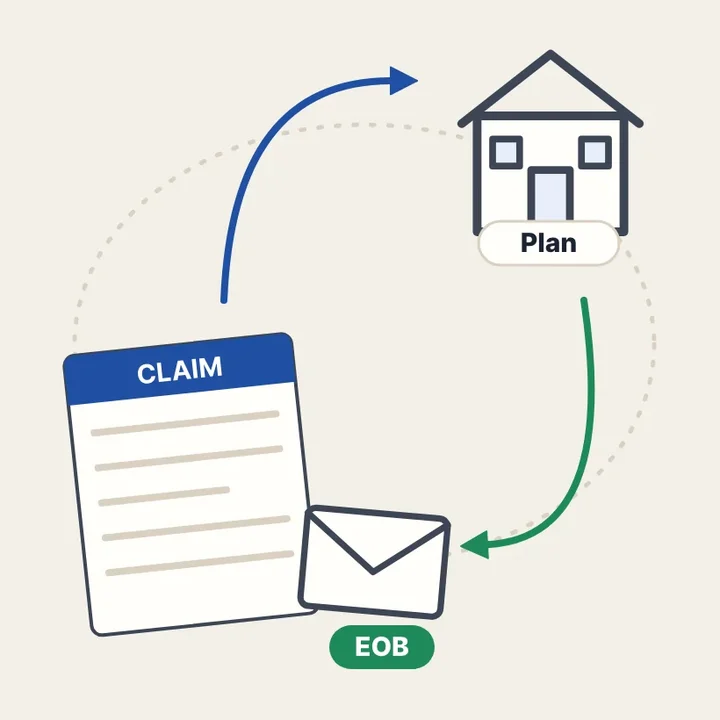
The work runs as a cycle, and the coordinator owns all of it:
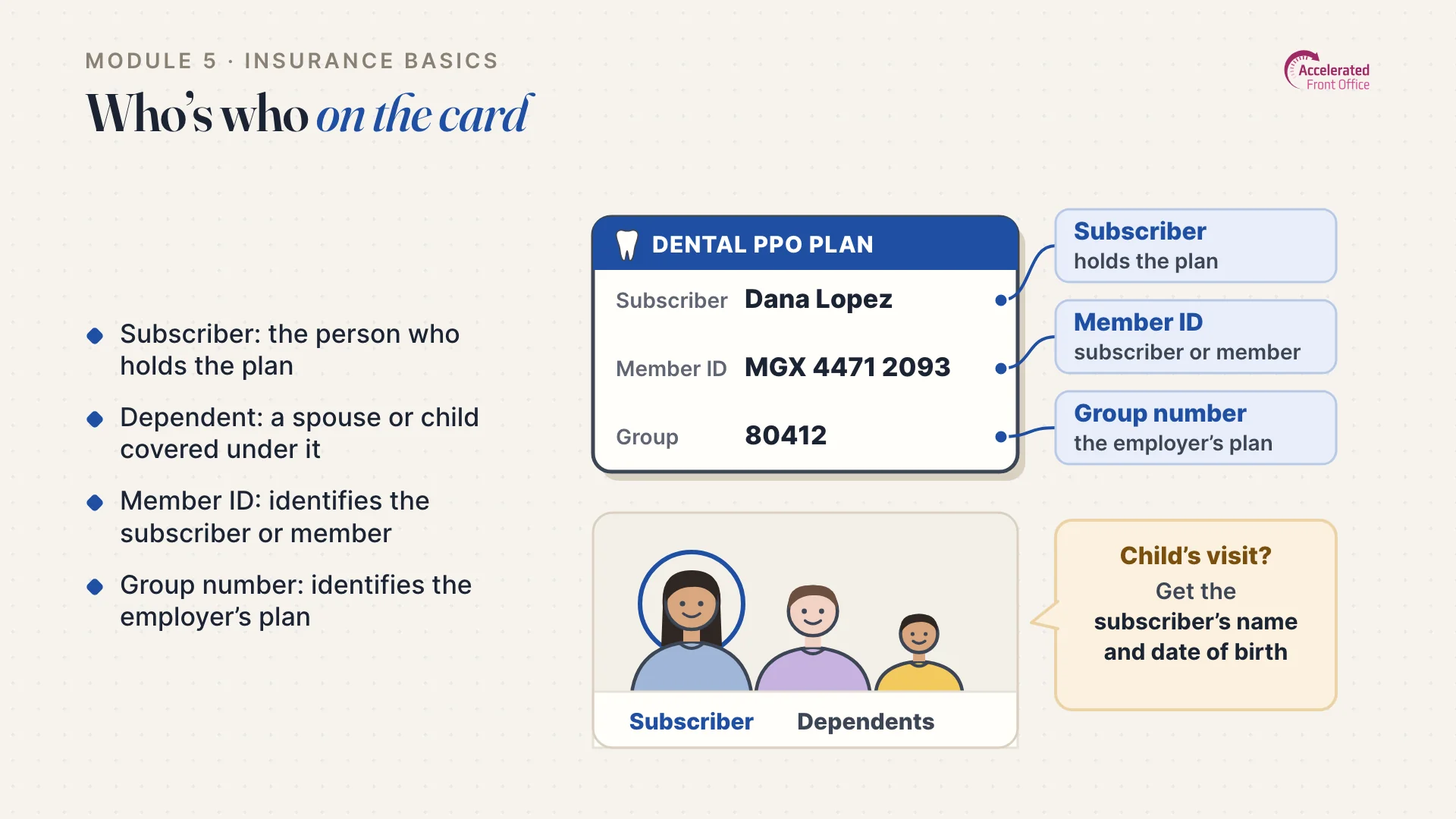
- Verify: before the visit, check eligibility and benefits in full: frequencies, history, downgrades, waiting periods and missing-tooth clauses.
- Code and send: after the visit, make sure each procedure is coded correctly and the claim goes out the same day with any x-rays, photos or narrative it needs.
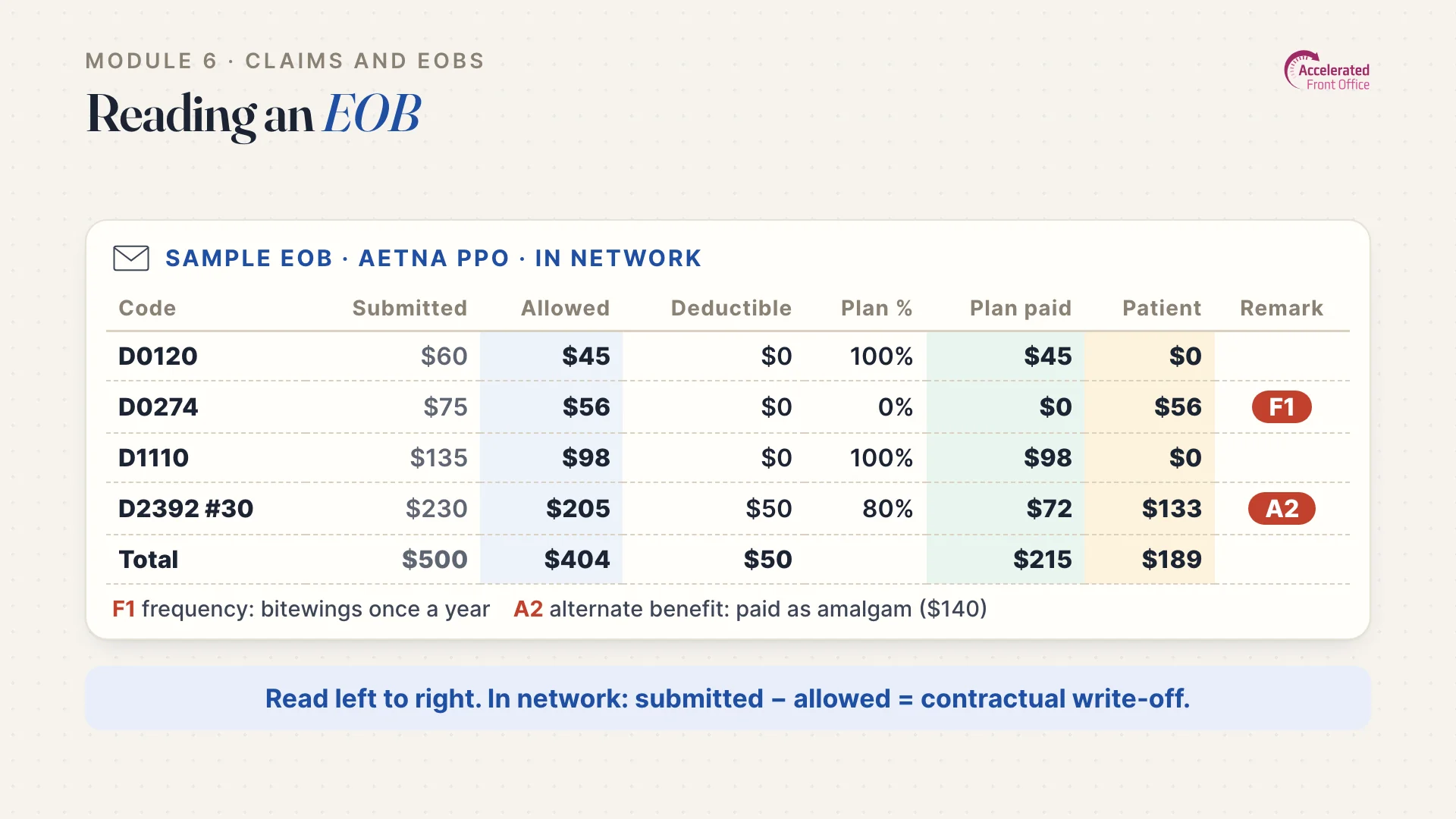
- Post: when payments arrive, post them from the EOB or electronic remittance, with the right write-offs.
- Follow up: work denials, send corrected claims and appeals, and chase unpaid claims before timely filing runs out.
- Collect from patients: clear statements, payment plans, refunds for credit balances, and kind, firm conversations about past-due balances.
You'll also see this role called insurance coordinator, billing coordinator, dental biller or revenue cycle coordinator. In smaller offices it's often part of a front desk job.
Why offices value this role
Every unverified visit can turn into a surprise bill and an upset patient. Every claim sent wrong waits weeks to be denied, then waits again. Money owed for more than 90 days gets harder to collect. A good billing coordinator keeps all of that small, and the office's cash steady.
What you'll read every day
The aging report lists unpaid balances by how old they are: 0 to 30 days, 31 to 60, 61 to 90 and over 90. Most coordinators work it weekly from the oldest bucket down. The EOB (explanation of benefits) shows what the plan allowed, paid and left to the patient; see how to read a dental EOB.
Skills you need
Coding
Dental procedures are billed with CDT codes, which the American Dental Association maintains and updates. The 2026 version, for example, brought 60 changes that took effect January 1, 2026. Coding has to match what the dentist did and wrote; coding to get a higher payment is fraud. Start with the CDT codes the front desk uses every day.
Plan rules
PPO allowed fees, deductibles, annual maximums, frequencies, downgrades and coordination of benefits when a patient has two plans.
Persistence and organization
Follow-up is a routine, not a scramble: the same day each week, oldest claims first, notes on every call.
Kind money conversations
Explaining why insurance paid less than the estimate, or asking about a past-due balance, without making the patient feel accused.
How to become an insurance and billing coordinator
- Start with the basics at the front desk. Verification, estimates, claims and EOBs are taught in Front Office Essentials.
- Take on more of the cycle. Offer to post EOBs, then to work part of the aging report.
- Learn denials. Each denial teaches you a plan rule. Keep a list of the ones you see most.
- Train for the role. Our Insurance and Billing Coordinator course includes practice calls with payers and patients and an aging report of 40 claims to clean up.
No license is required for dental billing work. Some people later add a billing or coding certification from a professional association, but dental offices mostly hire for what you can show you know.
Common questions
Is dental billing the same as medical billing?
They overlap, but dental uses different procedure codes (CDT), different claim forms and plans with annual maximums and frequency limits. Some dental procedures are billed to medical plans, which is a skill of its own.
Can I learn dental billing with no experience?
You can, but it's easier after some time at the front desk, where you'll see verification, estimates and EOBs every day. Front Office Essentials teaches those basics first.
What's timely filing?
The deadline a plan sets for receiving a claim after the date of service. Each plan sets its own. Miss it and the plan can refuse to pay, so the coordinator tracks claims that haven't been received.