How to use these answers
Don't memorize them. Use them as a shape: what the question is really checking, then a short, specific example from your own life. If you've trained for the job, use examples from your training ("in a practice call, a patient was upset about a bill, and I...").
1. "Tell me about yourself."
What they're checking: can you speak warmly and clearly for one minute? That's the job.
"I've spent four years in retail, most recently as a shift lead, where I handled customer questions and the register at a busy store. I love the part of the job where someone walks in frustrated and leaves happy. I wanted to move into healthcare, so I completed a dental front office course where I practiced new patient calls, insurance verification and scheduling. I'm excited to bring that to a team like yours."
2. "Why do you want to work in a dental office?"
What they're checking: are you here for the long run, or just any job?
"I want work that helps people and a team I can grow with. A lot of patients are nervous about the dentist, and the front desk sets the tone for their whole visit. I'd like to be the person who makes that easier."
3. "How would you answer our phone?"
What they're checking: they may literally ask you to do it. Have a greeting ready.
"Thank you for calling [practice name], this is [your name]. How can I help you today?" Then: get the caller's name, find out why they're calling, and offer two specific times.
4. "A patient calls, upset about a bill. What do you do?"
What they're checking: calm, empathy, and not making promises you can't keep.
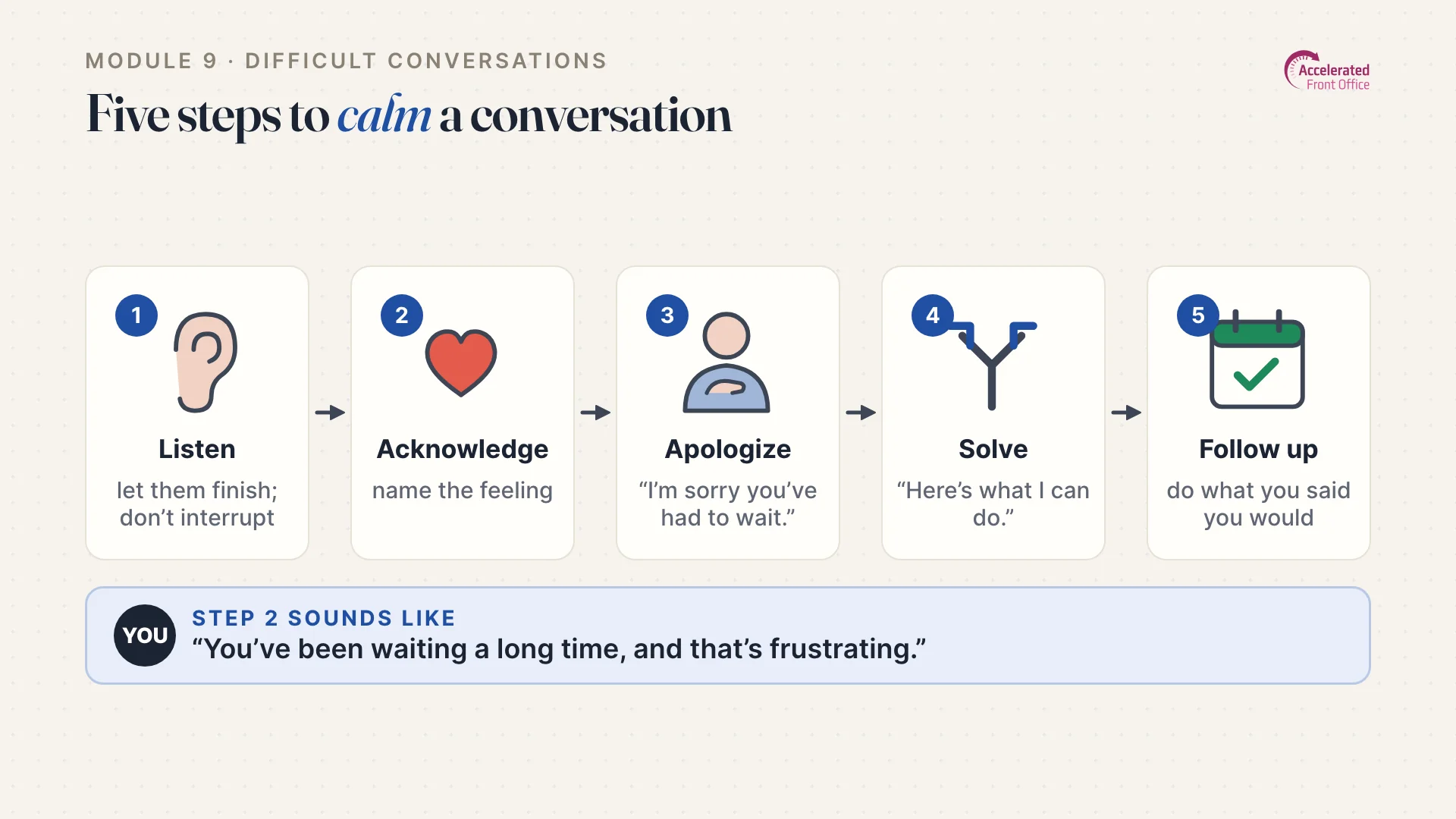
"First I'd verify who I'm speaking with, then let them explain without interrupting. I'd acknowledge it's frustrating to get a bill you didn't expect, pull up their account and the EOB, and explain in plain words what insurance paid and why. If something's wrong, I'd fix it or get the office manager. If it's correct, I'd offer the payment options we have. I wouldn't promise to waive anything without approval."
5. "The phone is ringing, a patient is at the window and the doctor needs you. What first?"
What they're checking: priorities under pressure.
"I'd smile at the patient in front of me so they know I see them, answer the phone and ask the caller if they can hold for a moment (unless it's an emergency), and let the doctor know I'll be right there. Then I'd handle them in order of urgency. The person standing in front of me usually comes first."
6. "What do you know about dental insurance?"
What they're checking: whether you'll need training from zero.
"I know the difference between PPO and HMO plans, what deductibles and annual maximums are, and that we verify benefits before a visit rather than promising coverage. I've practiced reading an EOB, so I can explain what the plan paid and what the patient owes."
If you're not there yet, read our guides to insurance verification and reading an EOB before the interview.
7. "How do you feel about asking patients for money?"
What they're checking: will you actually collect at checkout?
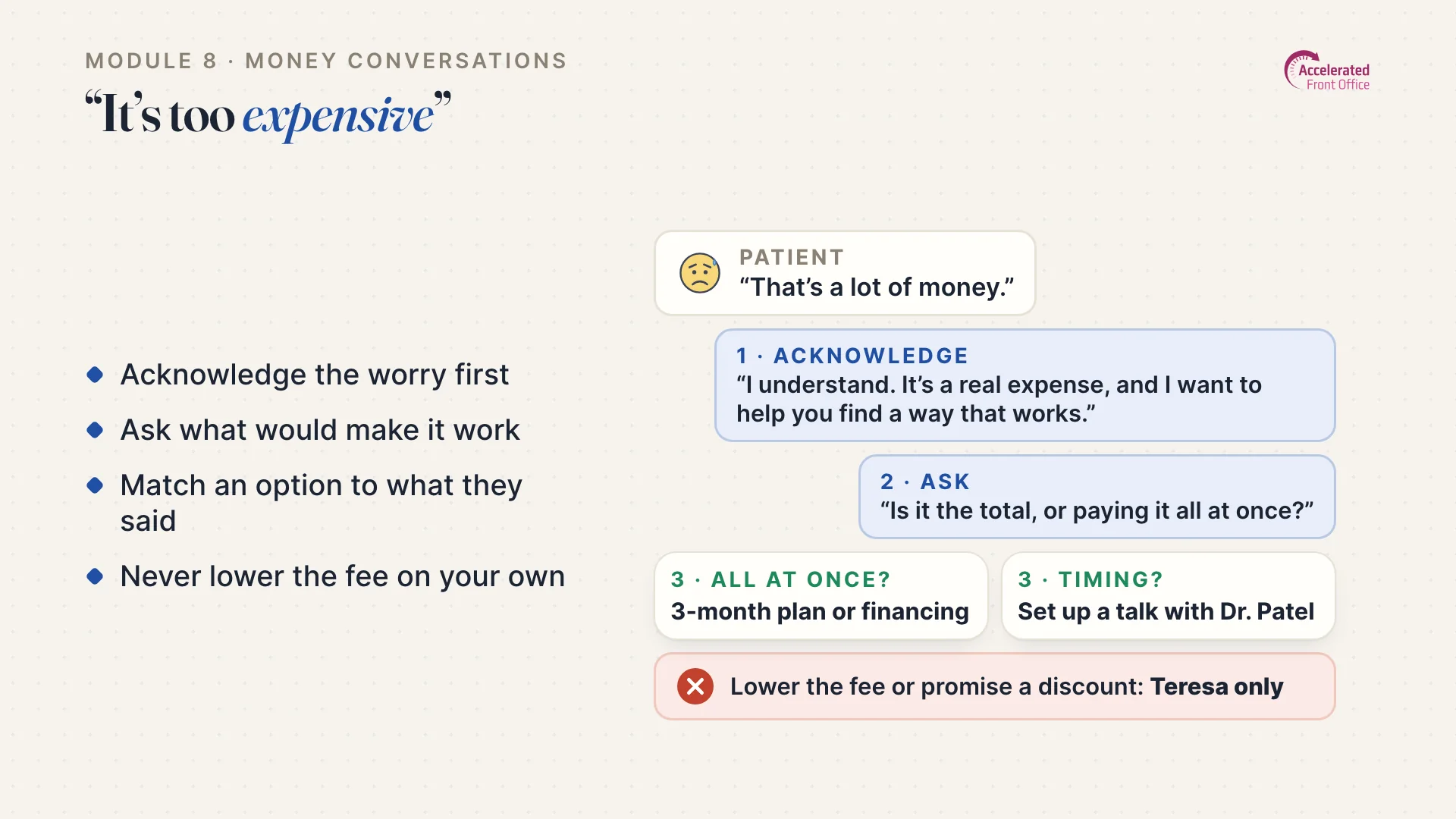
"Comfortable. Patients expect to pay; what they don't like is surprises. If we give a clear estimate before treatment and collect the estimated portion at the visit, the conversation is easy. I'd rather have a short, kind money conversation today than a collections call in three months."
8. "Someone calls asking about their wife's appointment. What can you share?"
What they're checking: HIPAA common sense.
"I'd check whether the patient has authorized us to share information with him. If not, I'd politely explain I can't discuss another person's account and offer to have her call us, or take a message."
9. "Tell me about a time you made a mistake."
What they're checking: honesty and how you fix things.
Pick a real, small mistake, say what you did to fix it, and what you changed so it didn't happen again. Keep it short.
10. "Do you have questions for us?"
Always yes. Good ones:
- "What does a great first 90 days look like in this role?"
- "Which insurance plans are you in network with?"
- "How is the front desk work split up here?"
- "What do patients say they love about this office?"
What is a working interview?
Many dental offices invite strong candidates for a working interview: a few hours or a day at the desk with the team. Arrive early, dress as the team does, introduce yourself to everyone, take notes, and ask before you do anything with a patient's account. Offices are mostly watching how you treat people and how quickly you learn. Ask in advance how long it is and whether it's paid.
Practice out loud
Reading answers isn't the same as saying them. The Getting hired module of Front Office Essentials includes a practice interview with an AI office manager who asks follow-up questions and scores your answers, and the practice calls give you real stories to tell.