What the data says
The Bureau of Labor Statistics doesn't publish a separate figure for dental receptionists, but it does for receptionists by industry. Healthcare and social assistance, which includes dental offices, employs 42% of all receptionists.
| Measure | Figure | Source |
|---|---|---|
| Median hourly pay, receptionists in healthcare and social assistance | $19.00 | BLS, May 2025 |
| Median hourly pay, all receptionists | $18.27 | BLS, May 2025 |
| Median annual pay, all receptionists | $38,010 | BLS, May 2025 |
| Openings per year, all receptionists (projected) | About 105,100 | BLS, 2025–35 projections |
| Average hourly rate, dental office receptionists (self-reported) | $19.54 | Payscale, June 2026 (small sample) |
"Median" means half of workers earned more and half earned less. Your offer will depend on where you live and what you bring.
A note on the outlook: BLS projects overall receptionist employment to dip slightly (about 2%) between 2025 and 2035. The roughly 105,100 openings a year come from people leaving the job and need replacing. Dental offices feel it: in the American Dental Association's Health Policy Institute survey for the first quarter of 2026, 58% of dentists who were recruiting front office staff called it very or extremely hard.
What raises dental receptionist pay?
Insurance and billing skills
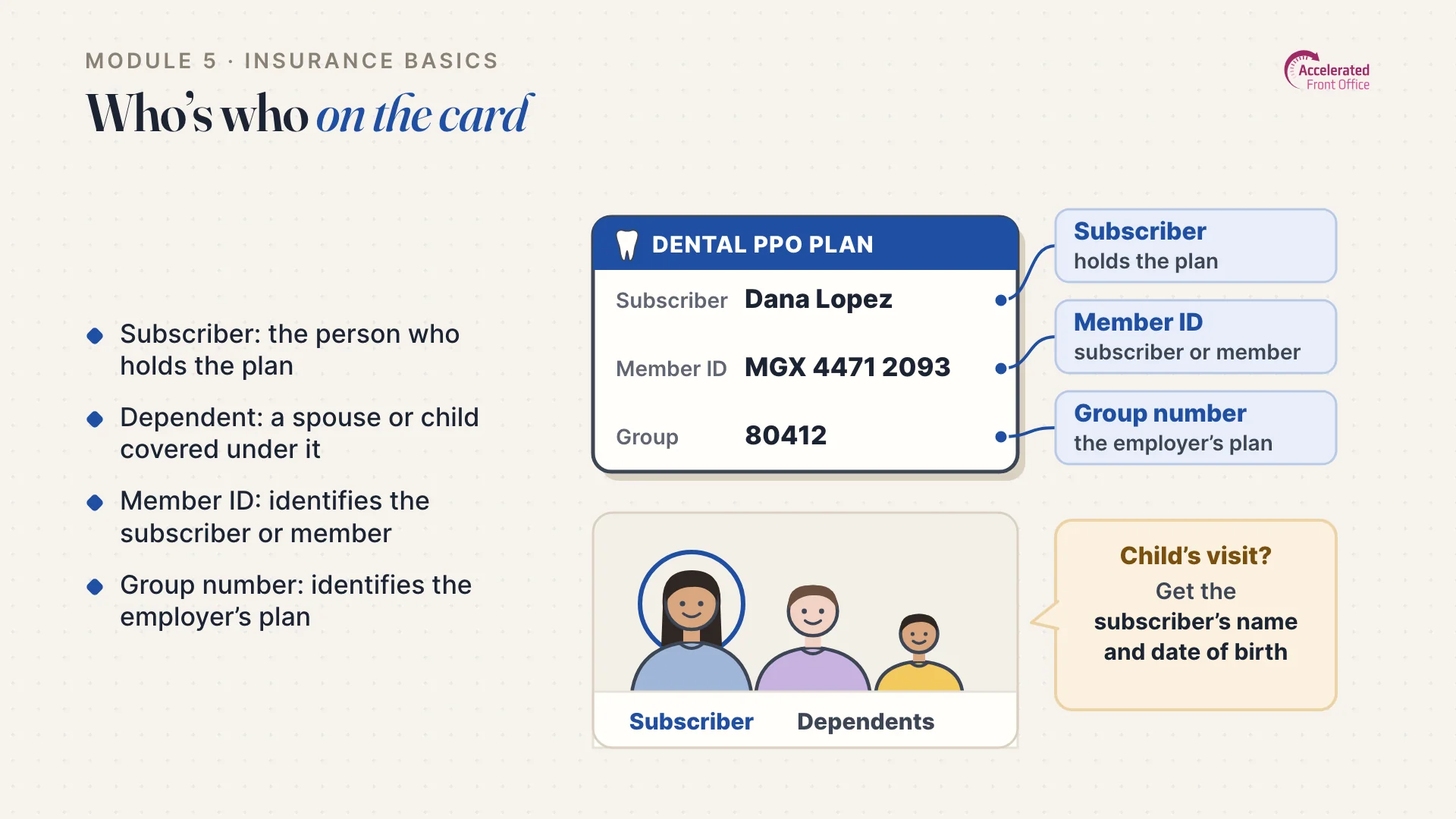
This is the biggest lever. A front desk person who can verify benefits, build accurate estimates, read EOBs, post payments and chase unpaid claims saves the practice real money. It's also the skill most applicants don't have. See our guides to insurance verification and reading an EOB.
Dental experience
Offices often pay more for someone who already knows dental terminology, scheduling and practice software, because training takes the team's time. Training before you're hired narrows that gap.
Location
Pay follows local cost of living. Check listings in your own area for the most accurate picture.
Being bilingual
In many communities, a front desk person who can talk with patients in a second language is especially valuable.
Taking on more
Running the schedule, presenting treatment, or managing collections are steps up from the all-round desk job.
Where the career goes from here
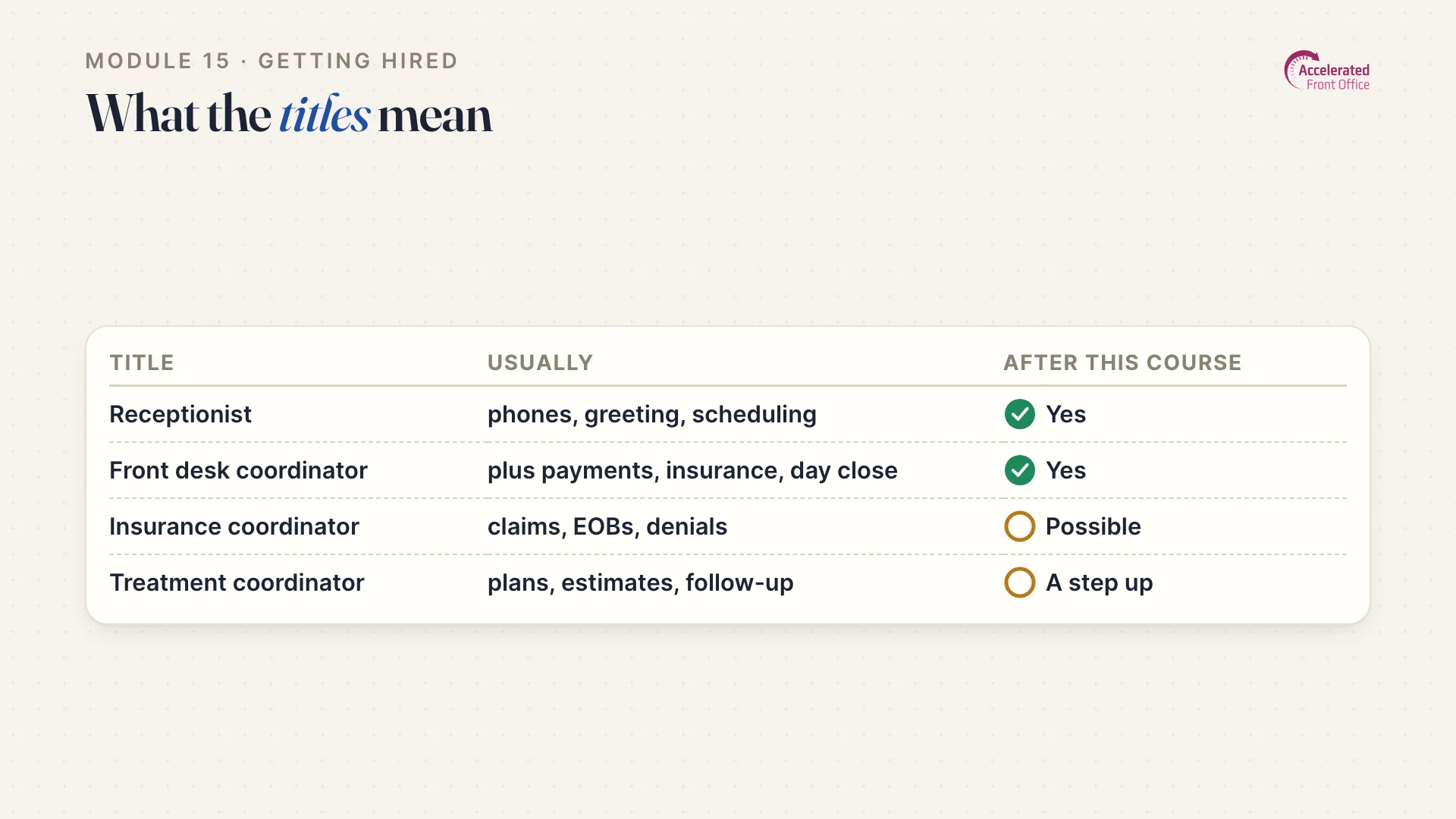
Many people start as a dental receptionist and move into:
- Insurance coordinator, focused on verification, claims and EOBs.
- Treatment coordinator, presenting treatment plans and estimates.
- Office manager, running the business side of the practice.
- Dental assistant, for those who want to move to the clinical side (that takes further training; see Accelerated Assisting).
Each step builds on the same base: phones, scheduling, insurance and money conversations.
How to negotiate your first offer
- Look up the going rate in your area from current job listings before the interview.
- Talk about what you can do, not what you need. "I can verify benefits and read an EOB" is a reason to pay more.
- Ask about the whole package: paid time off, health benefits, dental care for you and your family, a review after 90 days.
- If the starting rate is fixed, ask what you'd need to show for a raise at your first review, and write it down.
Common questions
How much do dental receptionists make an hour?
The BLS reports a median of $19.00 an hour for receptionists in healthcare and social assistance (May 2025). Pay at a specific dental office depends on location, experience and insurance skills.
Do dental receptionists get paid more than other receptionists?
Receptionists in healthcare had a slightly higher median ($19.00 an hour) than receptionists overall ($18.27) in May 2025, according to the BLS. Insurance and billing skills tend to raise pay further.