What an EOB is (and isn't)
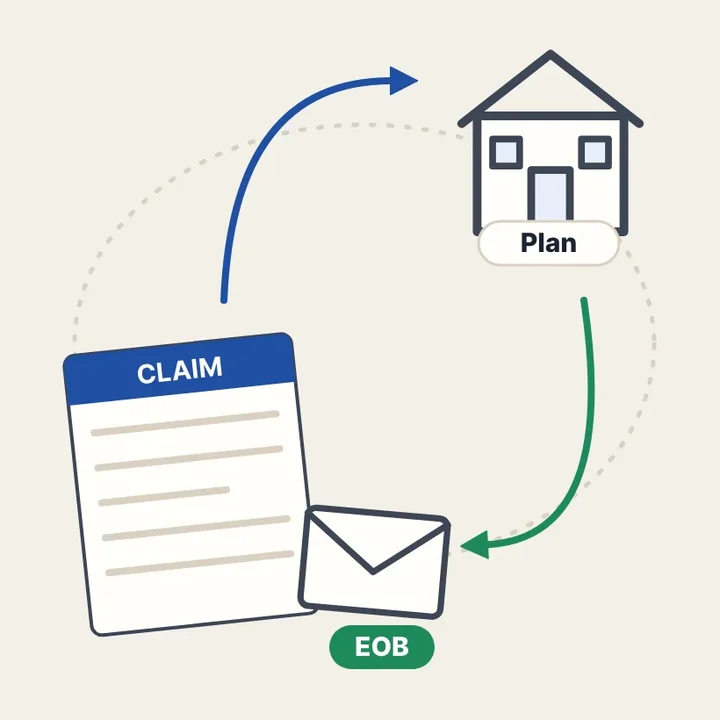
After the office sends a claim, the insurance company processes it and sends an explanation of benefits to the office and to the patient. It is not a bill. It explains the payment, and the front desk uses it to post the insurance payment, adjust the account and work out what the patient owes.
A real-looking EOB, column by column
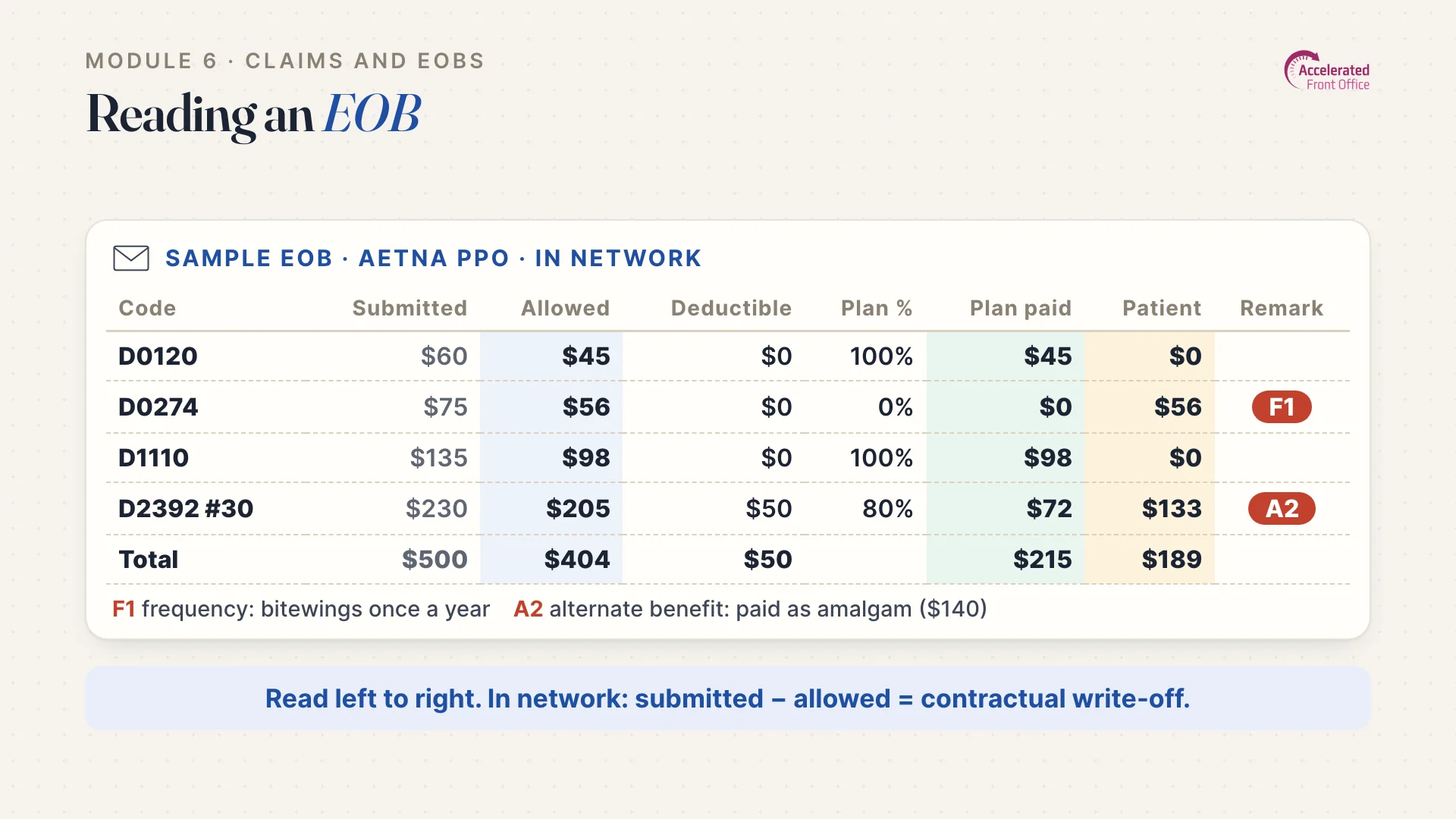
This EOB is from the course's EOB simulation. Leah Brooks, an Aetna PPO patient, had a recall exam, four bitewings, a cleaning and a two-surface white filling on tooth #30 at Maple Grove Dental, an in-network office.
| Code | Submitted | Allowed | Deductible | Plan % | Plan paid | Patient owes | Remark |
|---|---|---|---|---|---|---|---|
| D0120 | $60.00 | $45.00 | $0.00 | 100% | $45.00 | $0.00 | |
| D0274 | $75.00 | $56.00 | $0.00 | 0% | $0.00 | $56.00 | F1 |
| D1110 | $135.00 | $98.00 | $0.00 | 100% | $98.00 | $0.00 | |
| D2392 #30 MO | $230.00 | $205.00 | $50.00 | 80% | $72.00 | $133.00 | A2 |
| Total | $500.00 | $404.00 | $50.00 | $215.00 | $189.00 |
F1 Frequency limitation: benefit allowed once per calendar year; service previously paid on 3/9/2026.
A2 Alternate benefit: benefit based on the allowance for an amalgam (silver) restoration.
Submitted
The office's full fee for each procedure: Maple Grove's fee schedule.
Allowed
The most an in-network office may charge for that code under this plan. The difference between submitted and allowed ($500 − $404 = $96 here) is the contractual write-off: the office agreed to it by joining the network, and the patient never owes it.
Deductible
The amount the patient pays before the plan starts paying. Most plans don't apply it to preventive care, which is why it shows up only on the filling.
Plan %
The coverage level for that kind of service: 100% for preventive here, 80% for the filling.
Plan paid
What the insurance company is paying. Notice the filling: 80% of ($205 − $50) would be $124, but the plan paid $72. That's what remark A2 explains.
Patient owes
The patient's responsibility, which the office collects or bills.
Reading the remark codes
Remark codes are where the surprises live. In this EOB:
- F1, frequency limitation. Leah's plan pays for bitewings once per calendar year, and she already had them in March. The plan paid nothing; the $56 is hers. Good verification would have caught this before the visit.
- A2, alternate benefit. Her plan pays back-tooth fillings at the silver filling rate. Aetna's allowance for a two-surface silver filling is $140, so the plan paid 80% of ($140 − $50 deductible) = $72. Leah owes the rest of the $205 allowed fee: $133.
Leah paid her $133 estimate at checkout, because the office knew about the downgrade from verification. The $56 for the bitewings is new, so the front desk will call her and explain it.
Posting the EOB
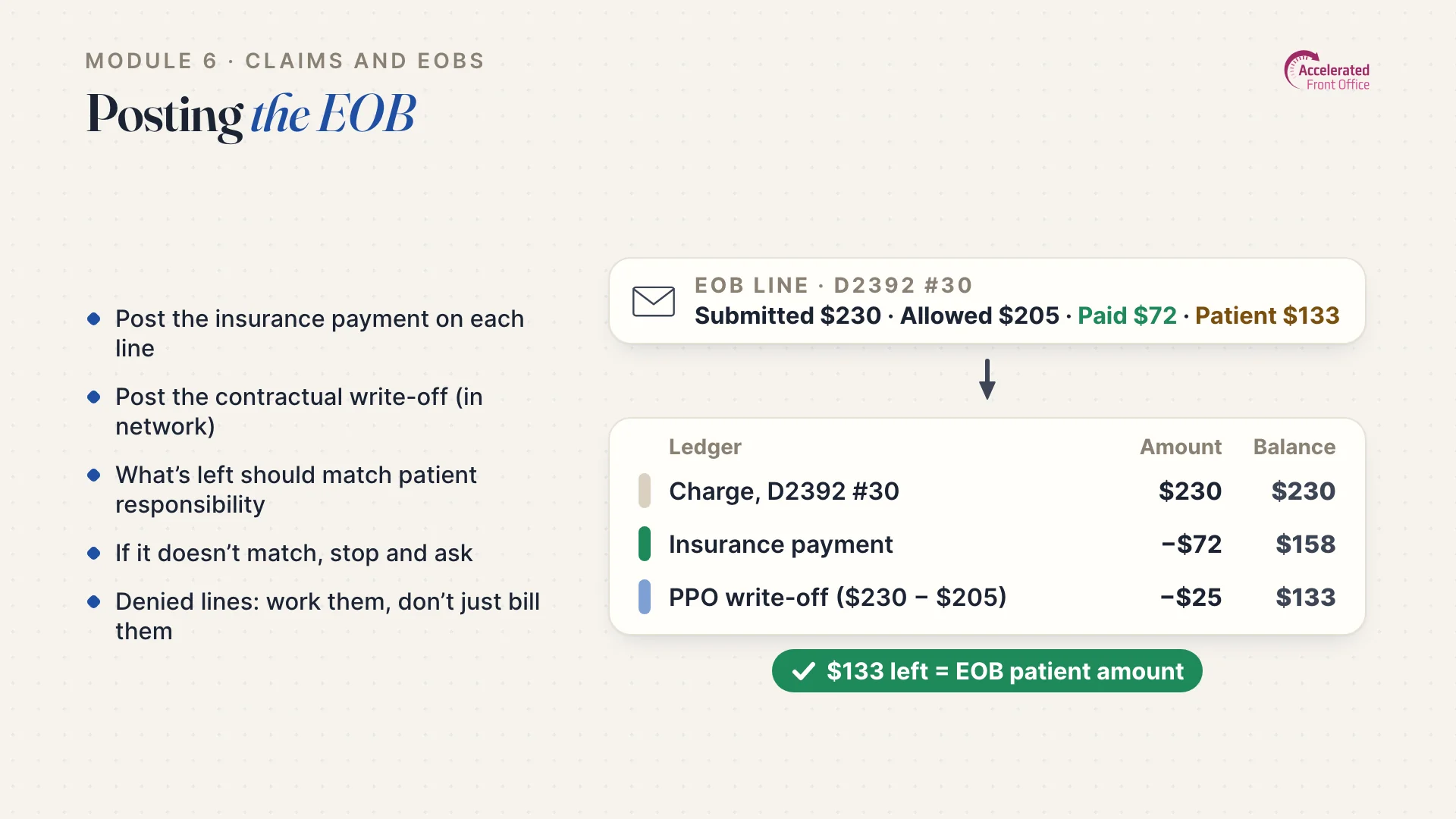
- Find the claim in the practice management software and match it to the EOB line by line.
- Post the insurance payment ($215) to each procedure.
- Post the contractual write-off ($96) as a PPO adjustment.
- Check the patient's balance against the EOB's "patient owes" column, minus anything already paid.
- Act on remark codes: correct and resubmit a claim if the office made an error, appeal if the plan made one, or contact the patient about their balance.
Explaining an EOB to a patient
Patients call confused about EOBs all the time. Keep it simple:
"This is your insurance company explaining what they paid. Your exam, cleaning and filling were covered as expected. The $56 is for your bitewing x-rays: your plan covers those once a year, and you'd already had them in March, so this set wasn't covered. I'm sorry we didn't catch that before your visit."
Explaining an EOB is a practice call in Front Office Essentials, and reading and posting EOBs (including messy ones) is a full simulation.
Why claims get denied
- Frequency limits (too soon since the last one).
- Missing information: a tooth number, surfaces, x-rays or a narrative the plan requires.
- The patient's coverage wasn't active on the date of service.
- A waiting period or missing tooth clause.
- Coordination of benefits: the other plan should have paid first.
Many of these are preventable with good insurance verification.