The main duties of a dental receptionist
- Phones: answering new patient calls, emergencies, cancellations and billing questions, and calling patients who are overdue for a cleaning.
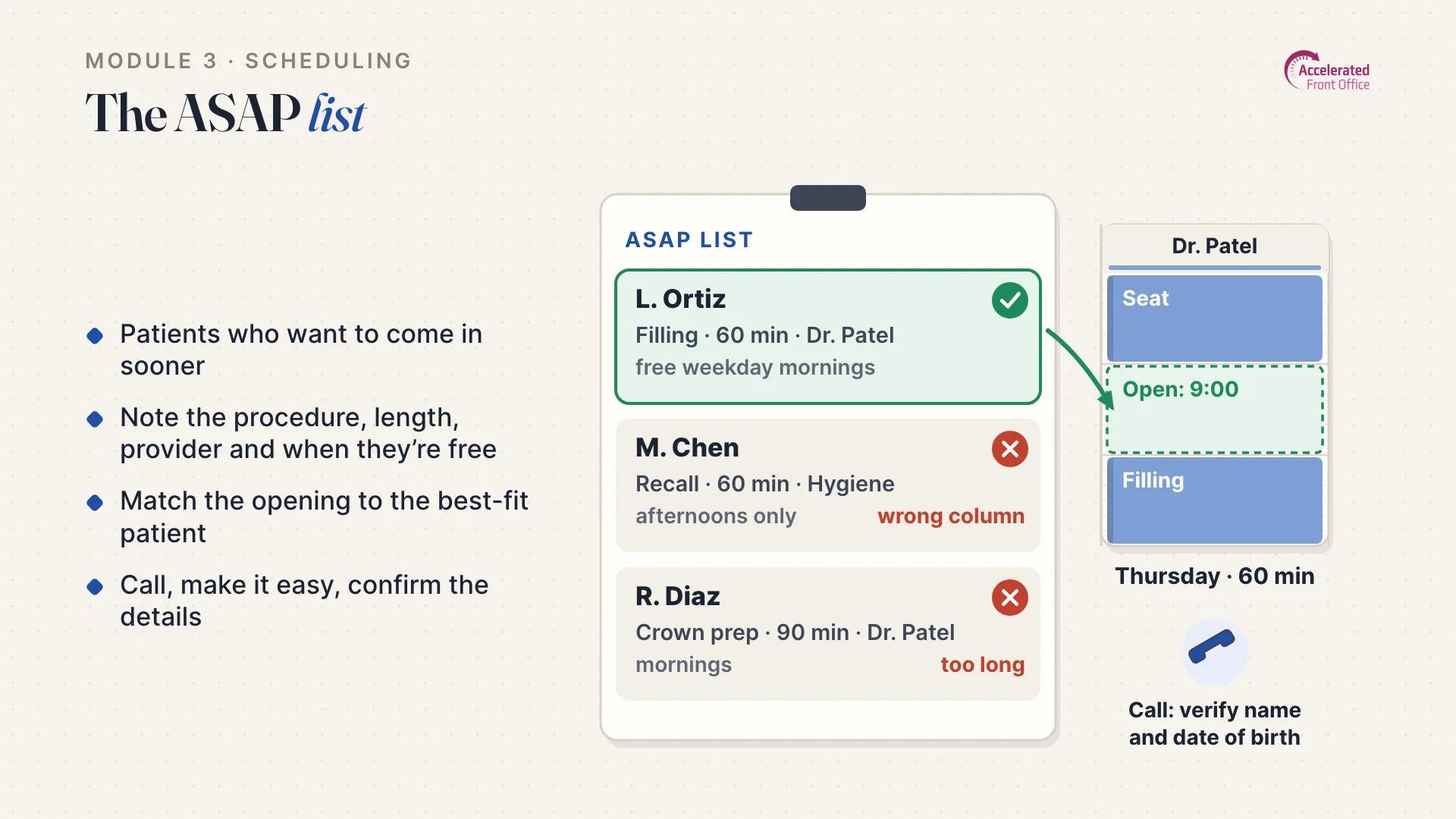
- Scheduling: booking visits of the right length with the right provider, holding time for emergencies, and filling openings from the ASAP list.
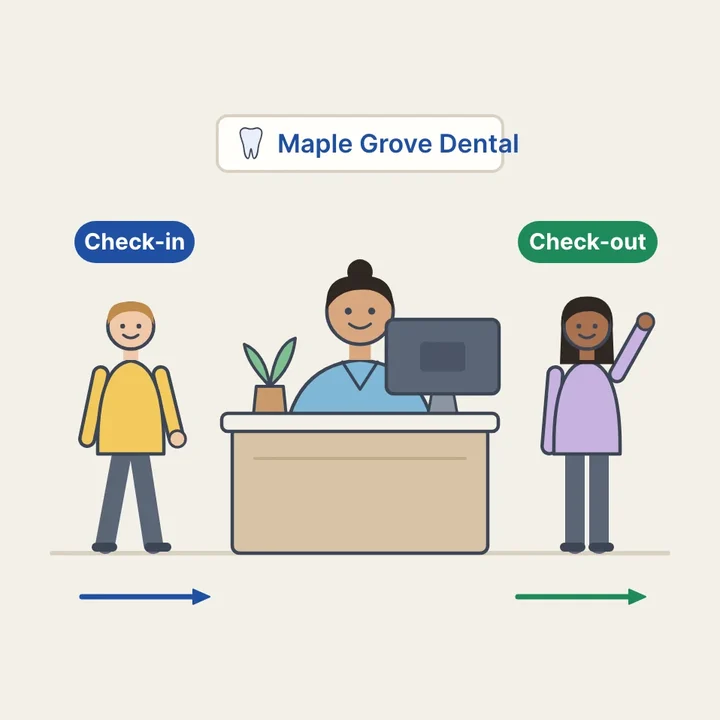
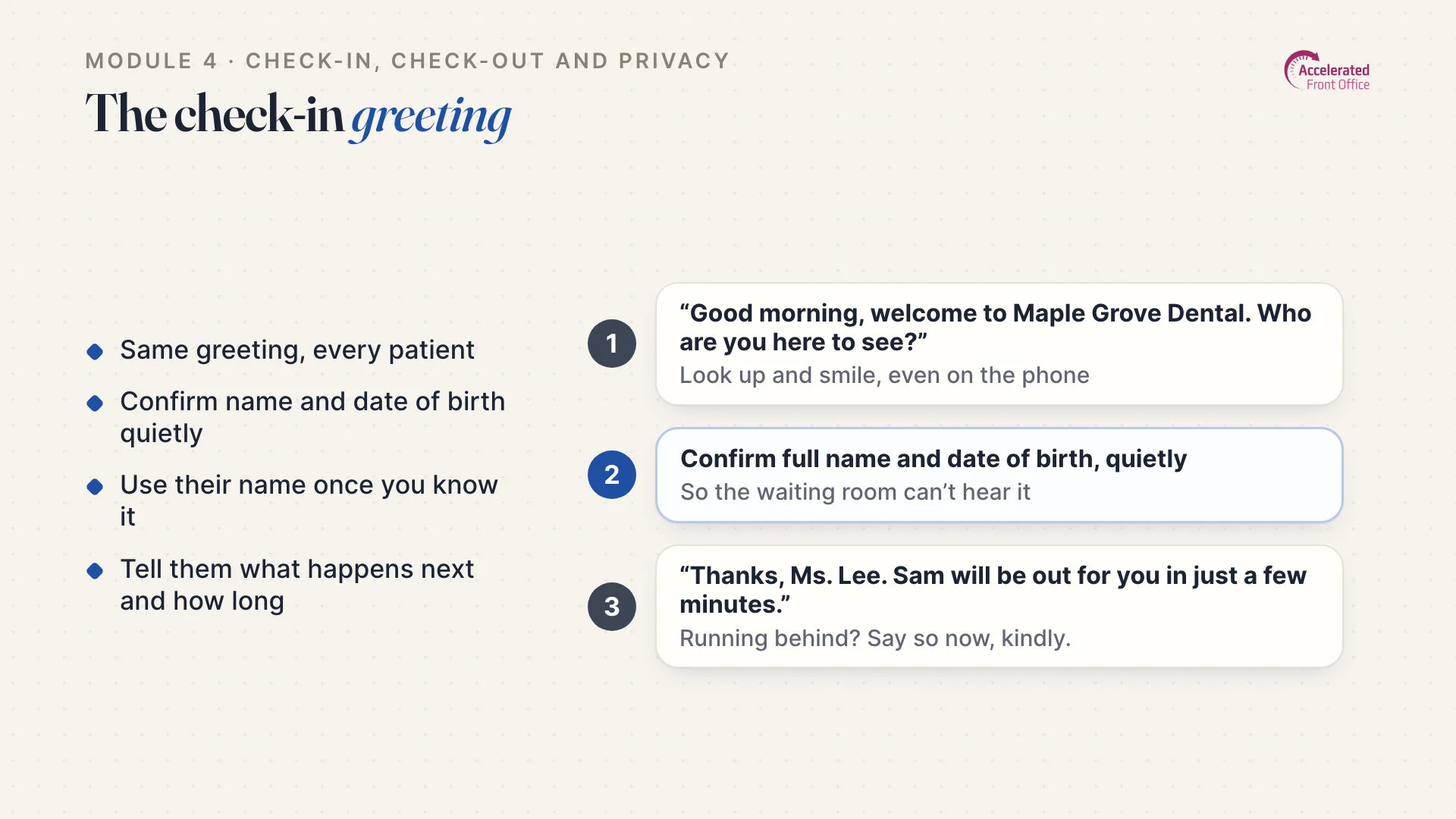
- Check-in: greeting patients, updating health histories and contact details, scanning ID and insurance cards, collecting copays.
- Insurance: verifying benefits before visits, sending claims, posting payments from EOBs and following up on unpaid claims.
- Check-out: collecting the patient's portion, presenting estimates for future treatment, and booking the next visit.
- Records and privacy: handling records requests, referrals to specialists, and keeping patient information private under HIPAA.
- The numbers: closing out the day so payments match, and tracking the schedule, collections and unscheduled treatment.
A day at the desk, hour by hour
Here's a typical Tuesday at Maple Grove Dental, the four-chair practice our course is set in. The office opens at 7:00 AM with two dentists and two hygienists working.
| Time | What's happening | The skill it takes |
|---|---|---|
| 6:45 AM | Check the overnight messages, online bookings and notes from the after-hours answering service. | Triage: what needs a call before 8:00, what can wait |
| 6:50 AM | Morning huddle with the team: today's schedule, open time, patients who owe a balance, patients with health alerts. | Reading the schedule and the numbers |
| 7:00 AM | First patients arrive. Check them in, update health histories, collect copays. | Check-in, health history flags, collecting payment |
| 8:00 AM | A patient cancels tomorrow's crown. Unused emergency holds are released. Call the ASAP list to fill the gaps. | Scheduling, phone skills |
| 8:30 AM | A caller says he's a patient's husband and asks about her balance. | HIPAA: verify, minimum necessary |
| 9:00 AM | Check out a patient who needs a crown: present the estimate and book the visit. | Insurance estimates, money conversations |
| 10:00 AM | Confirm a lab case is back for this afternoon's crown seat; send a referral to an oral surgeon. | Referral and lab tracking |
| 10:40 AM | A patient in the waiting room feels faint. Get the clinical team right away and keep everyone else calm. | Emergencies at the front desk |
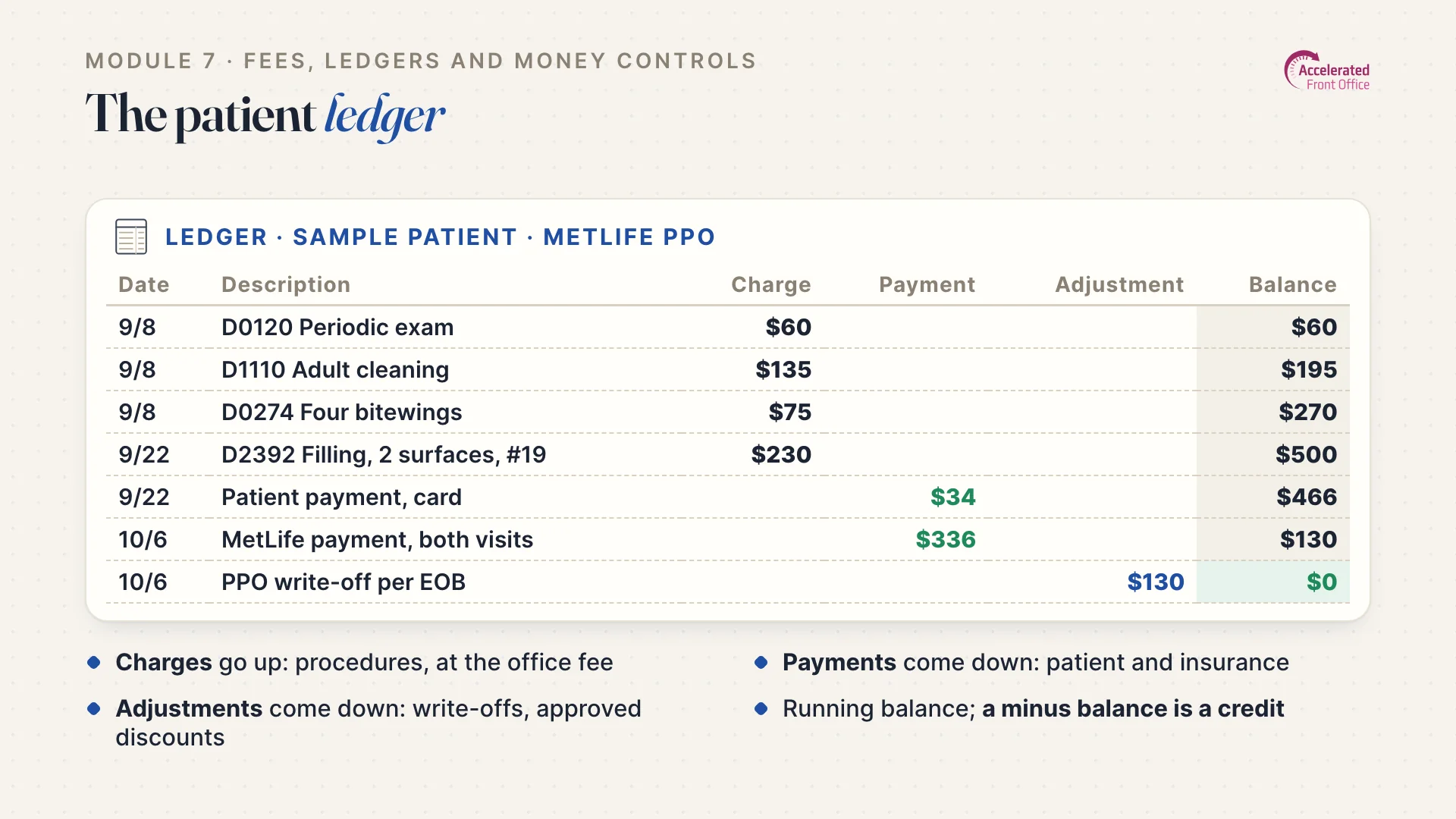
| Afternoon | Verify benefits for the next three business days, post insurance payments from EOBs, follow up on an unpaid claim. | Insurance verification, claims and EOBs |
| 3:45 PM | Close out the day: payments match the deposit, tomorrow is confirmed. | Ledgers and end-of-day balancing |
That's the "day at the desk" our course's capstone walks you through, one decision at a time.
What skills does a dental receptionist need?
People skills
Warmth on the phone, patience with nervous patients, and the ability to hold a policy (like a missed-appointment fee) kindly but clearly.
Organization
The front desk juggles a ringing phone, a patient at the window and a provider asking a question, often all at once. Knowing what comes first is a skill you can practice.
Dental knowledge
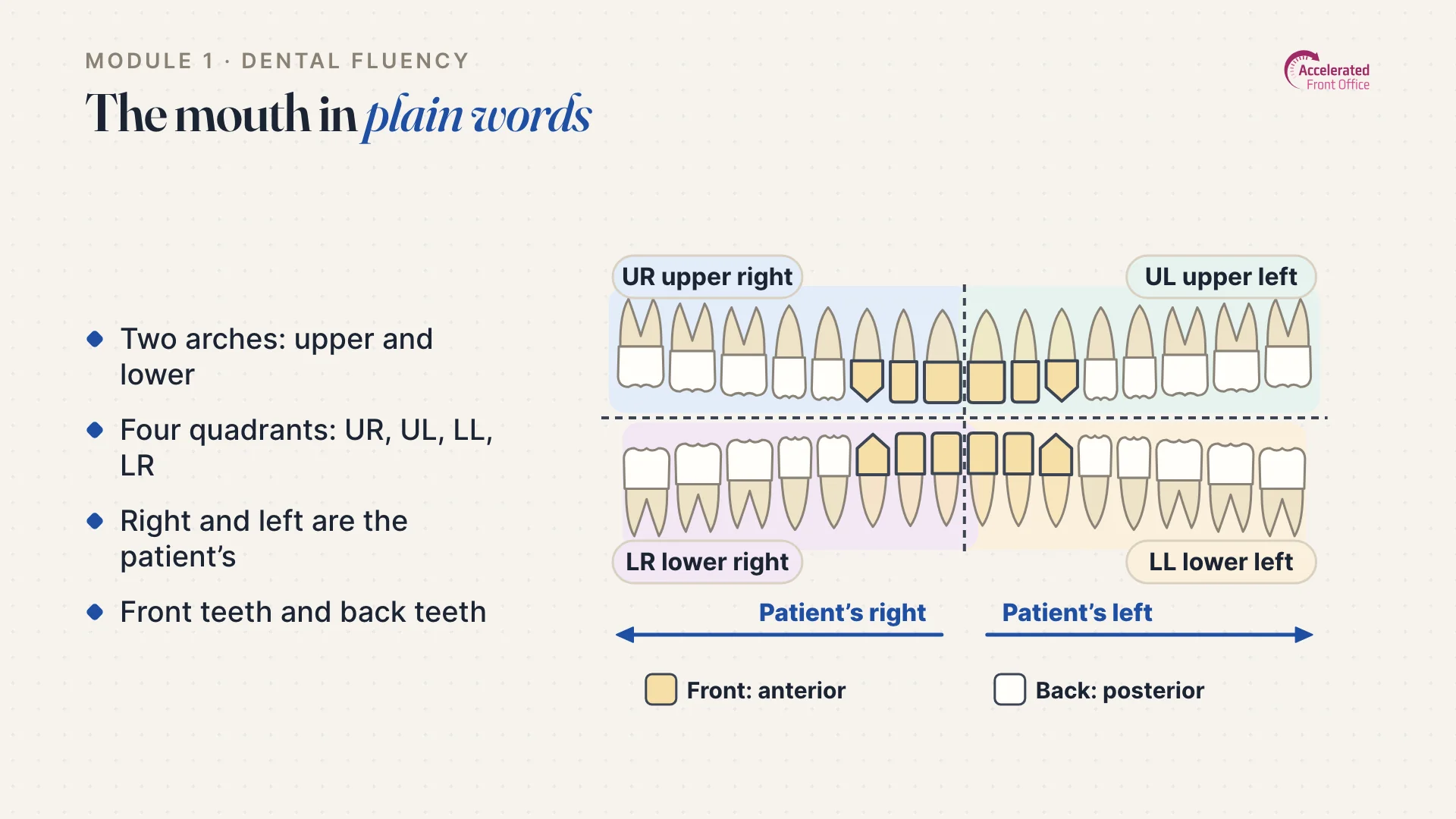
Enough terminology to book the right visit, and enough insurance knowledge to explain coverage honestly. See our dental terminology guide and insurance verification checklist.
Software
Every office uses practice management software for the schedule, patient records, insurance and the ledger. The brands differ, but the tasks are the same: register a patient, attach insurance, book from a treatment plan, check out and post payments.
What a dental receptionist doesn't do
The front desk never diagnoses, recommends medication or promises a treatment outcome. If a patient asks "is this tooth going to need a root canal?", the right answer is that the dentist will tell them at the visit. In an emergency in the office, the front desk gets the clinical team and supports them; the clinical team runs the emergency.
Job titles you'll see
- Dental receptionist / front desk coordinator: the all-round role described here.
- Scheduling coordinator: owns the schedule and recall.
- Insurance coordinator: verification, claims, EOBs and follow-up.
- Treatment coordinator: presents treatment plans and estimates, and books the work.
- Office manager: runs the business side of the practice, often after years at the desk.
Most people start in the all-round role and grow into one of the others. Insurance and treatment skills are the usual path to higher pay; see how much dental receptionists make.
What are the hours like?
Most general dental offices work weekday daytime hours, often starting early (7:00 AM is common) and sometimes with one late evening or a Saturday each month. Maple Grove, for example, runs 7:00 to 4:00 Monday to Thursday and 7:00 to 1:00 on Friday. Hours vary by office, so ask in the interview.